
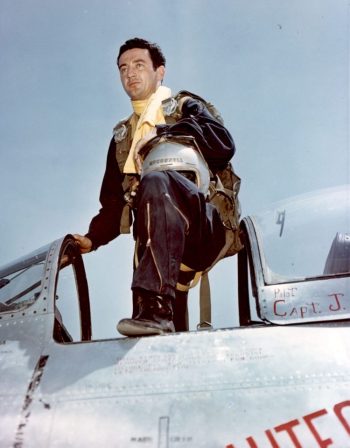
Ralph Parr
Captain, U.S. Air Force
335th Fighter-Interceptor Squadron
4th Fighter-Interceptor Wing
Korean War POW Survivor
Hometown: Portsmouth, Ohio
EARLY LIFE
Ralph Parr grew up in Portsmouth, Ohio, and became a fighter pilot during the dawn of the jet age. By the time he deployed to Korea, he was flying the F-86 Sabre in the dangerous skies of MiG Alley.
SHOT DOWN OVER KOREA
During combat operations late in the war, Parr’s aircraft was struck during aerial combat operations. Forced to eject behind enemy lines, he was captured by Communist forces and became a prisoner of war.
Life in POW camps was harsh:
- extreme cold
- limited food
- constant interrogation
- psychological pressure
American prisoners endured isolation and uncertainty, often unsure whether they would ever return home.
SURVIVAL AND RETURN
Parr survived captivity until the armistice in July 1953.
During Operation Big Switch, the prisoner exchange that followed the ceasefire, he was finally repatriated along with thousands of American POWs.
He came home alive — something many families feared would never happen.
WHY POW STORIES MATTER
The Korean War produced more than 7,000 American POWs. Survival required resilience beyond the battlefield.
POW survivors represent a different kind of courage:
Not the moment of combat,
but the endurance of days, months, and years afterward.
LEGACY
Some heroes fight for minutes.
Some fight for years.
Captain Ralph Parr survived the skies of MiG Alley and the trials of captivity, returning home as living proof of American resilience.
He endured.
He survived.
He came home.
Honor The Fallen. Support The Living. Teach The Next Generation.
Visit: mickyspano.com



Leave a Reply