
A Public Explainer on the U Visa, the Cap That Broke It, and a Law-and-Order Case for Decapping
The One-Sentence Summary For the Skeptics: The U Visa should have no numerical cap, but it should require strict adherence to American laws, including work, taxes, language learning, and full compliance with American laws to keep it. That’s the deal. No loopholes. No free passes.
What the U Visa Is and Is Not: What it is: It is a law-enforcement tool designed to help police and prosecutors solve serious crimes. It is available only to victims of specific violent or coercive crimes. No exceptions. No loopholes. No free passes. It requires active, not passive, cooperation with law enforcement. It requires certification from police, prosecutors, and/or judges.
What it is not: Not amnesty. Not asylum. Not open borders. Not an automatic legal status. Not immunity from U.S. law. If law enforcement doesn’t certify cooperation, the application stops. Full stop.
The Real Problem: The 10,000-Visa Cap: Congress capped the U-Visa program at 10,000 principal visas per year in 2000. That number has never changed, despite population growth, increased crime reporting, and expanded enforcement needs. and hundreds of thousands of pending applications. In legal terms, the data and metrics for eligibility become stale, whereas decision-making should be based on fresh data and metrics.
The Result: Victims wait 10–15 years for final decisions, and some of them should not be here. They should have been deported the moment we knew they were not eligible. One of the conditions for application must be their consent to be immediately deported for lack of eligibility. When more than 90 days have passed, cooperation incentives collapse, police lose witnesses, crimes go unreported, and public confidence erodes. A program designed to help law enforcement now gets in its own way.
Why Decapping Makes Sense (From a Law-and-Order Perspective): Removing the cap does not mean removing standards. It means replacing a blind numerical limit with clear behavioral requirements. Caps ration paperwork. Standards regulate behavior.
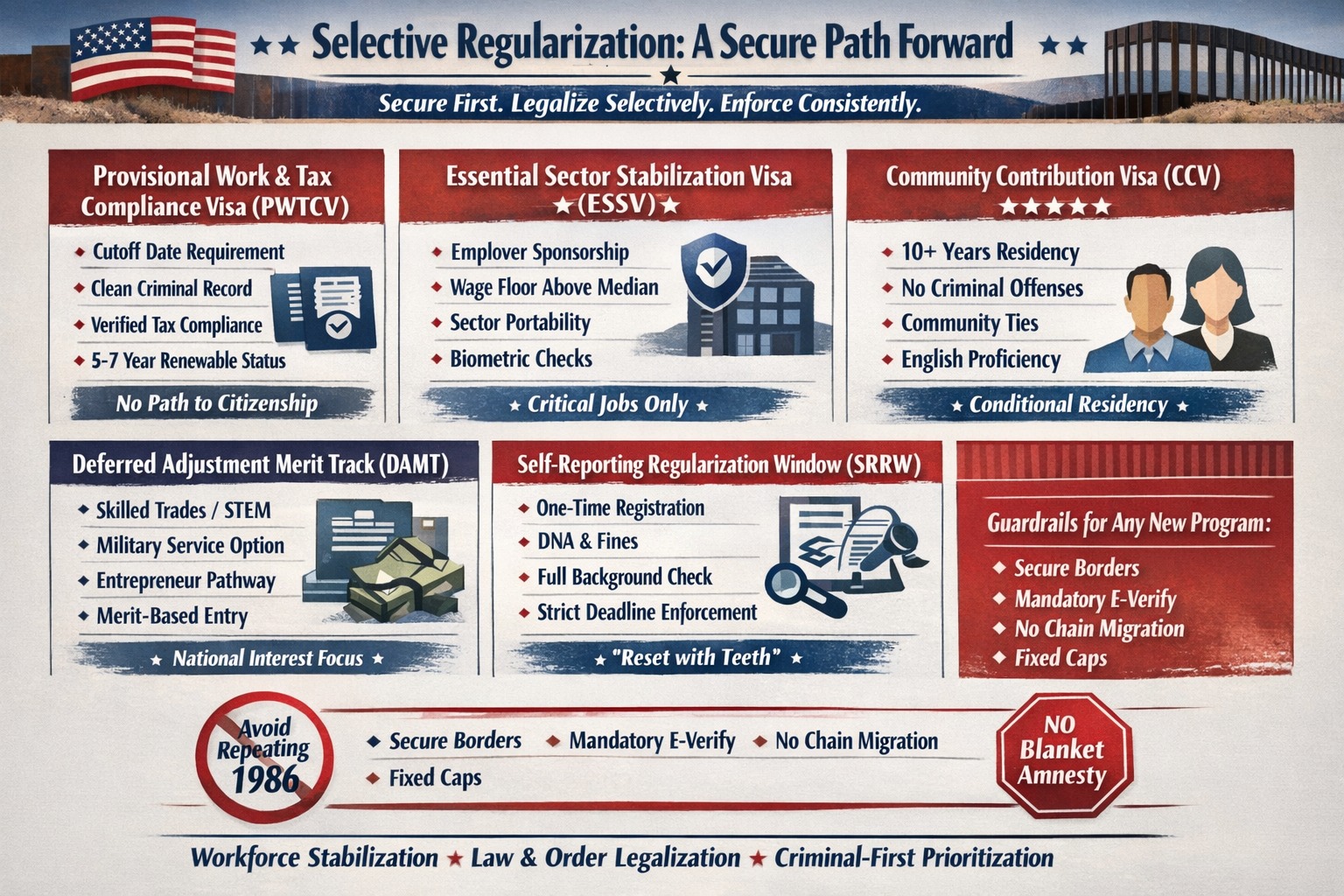
The Tradeoff: Decapping in Exchange for Discipline: This reform proposal is simple: If we remove the cap, U-Visa holders must meet strict, measurable requirements, and lose status if they don’t. If they don’t sign a consent form upon arrival, they must be deported immediately. No special treatment. No exceptions.
What Would Be Required to Keep a U Visa: Continued Law Enforcement Cooperation: Ongoing cooperation when reasonably requested, no false statements, no obstruction, Refusal without cause = loss of status. This keeps the visa tied to its original purpose: enforcing the law.
Functional English Proficiency: Required within a reasonable time (e.g., 24 months): Enough to communicate at work, understand basic laws, and interact with police and courts. This is not cultural policing. It’s basic public safety and integration.
Work or Training: Must maintain lawful employment or be enrolled in job training, education, or credentialing for jobs that actually exist. No course for study in underwater basket weaving or deviant art. The U Visa includes work authorization for a reason: participation, not dependency.
Tax Compliance: Must file federal income taxes. Must file state income taxes where applicable. Must work where taxes are withheld, not as self-employed street pharmacists. Willful failure to file or pay = loss of status. The POINT: Equal protection under law includes equal obligation.
Lawful ID and Driving Rules: Must maintain a valid government ID. No driving without a valid license. No registering to vote and no voting. Driving illegally = revocation. Same rule as everyone else. No carve-outs.
Strict Behavioral Standards: Automatic grounds for revocation include: felony convictions, violent crime, drug trafficking, human trafficking, fraud or identity abuse, repeated misdemeanors, tax evasion, and lying to law enforcement or immigration authorities. If you break the law, you lose the benefit. Period.
The Four-Year Limit — Explained Simply: Yes, the U Visa is limited to four years. That makes sense only if Processing is timely, and law-abiding applicants can extend their status while waiting. The Fix: Keep the four-year structure. Allow automatic extensions for compliant individuals. Immediate termination for violations. Think of it as a performance-based status, not a forever pass.
Why This Strengthens Immigration Enforcement: This approach: It encourages crime reporting, improves prosecutions, reduces underground crime, rewards lawful behavior, removes incentives for abuse, and restores public trust. It replaces emotional arguments with enforceable rules.
Addressing the Predictable Criticisms:
~ “This is just amnesty.” No. Amnesty ignores conduct. This proposal conditions status on conduct.
~ “This punishes victims.” No. It protects victims who obey the law and cooperate.
~ “This encourages illegal immigration.” No. It applies only after victimization, certification, and cooperation.
~ “This is anti-immigrant.” No. It is pro-law, pro-victim, and pro-public safety.
The Wrap-up: The U Visa was built to help enforce the law. The cap shackled it. Removing the cap while raising the standards restores: law enforcement effectiveness, victim protection, constitutional order, and public confidence. Mercy with rules works. Mercy without rules fails. This proposal delivers mercy with rules.
~ Dr. Ron Bartels
@Ronumundo












Leave a Reply