
By Dr Ron Bartels, @Ronomundo © 2026
A Concerned Citizen Contacted Me Regarding Bad Governance. This person is well known to me as being concerned about the quality of present-day governance. The following is my reply.
Citizen, you’re right, and the Founders anticipated this problem with unsettling clarity.
They understood human nature well enough to know that liberty is lost not only through malice but through neglect. So they embedded a built-in remedy in the final clause of the First Amendment: the right of the people to petition the government for a redress of grievances. That clause is not decorative. It is functional.
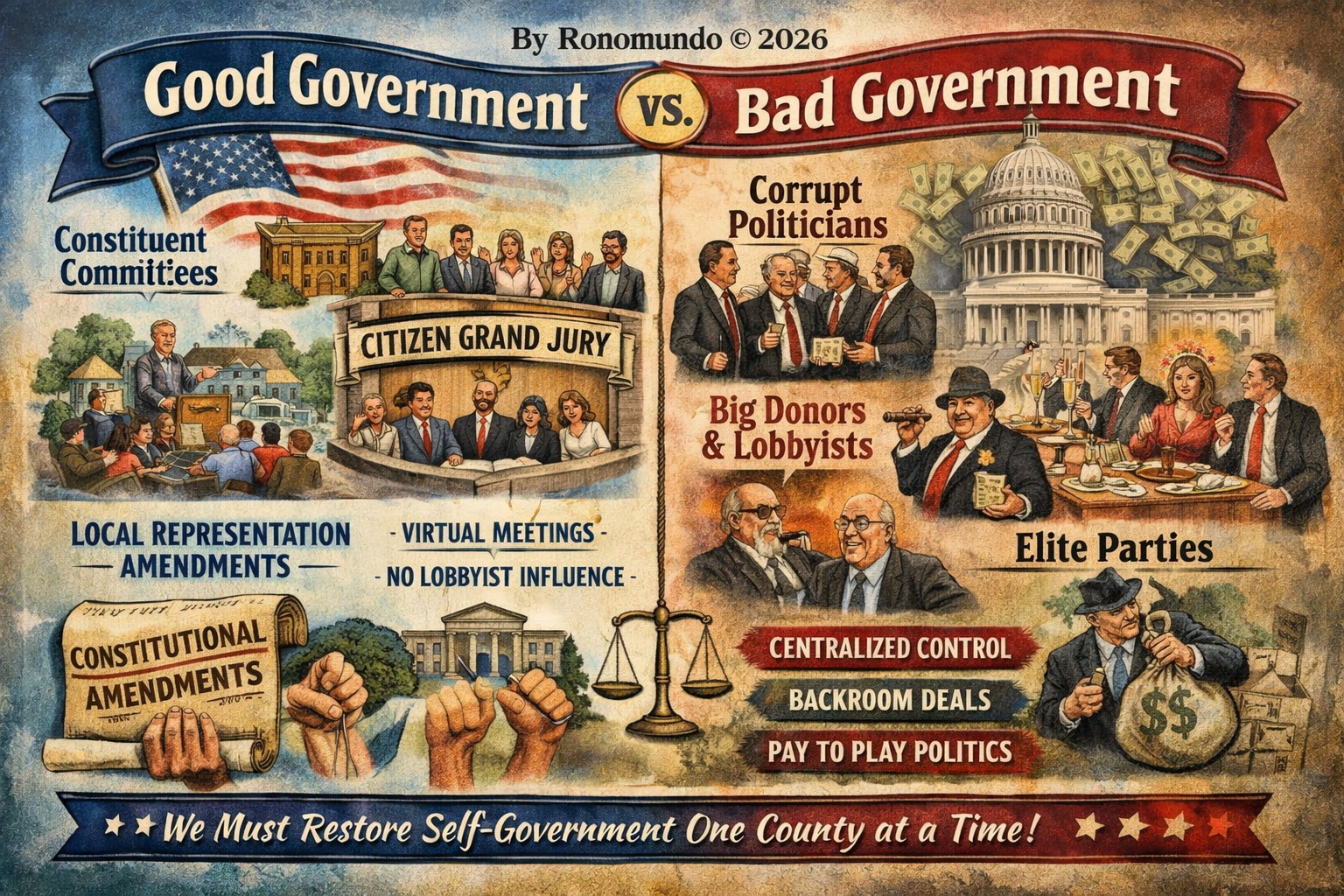
That is why we are organizing county-based Good Government Constituent Committees in every county nationwide, alongside Citizen Grand Juries, and, when the structure is mature, the People’s Bar Associations. These are not abstract ideas or protest movements. They are lawful, operational mechanisms of self-government, fully protected by the First Amendment. No one needs to waste family financial resources on seminars from snake-oil salesmen.
Who can participate?
Every registered voter.
Why only registered voters?
Because only registered voters have the legal authority to amend state and federal constitutions. Non-citizens cannot. Citizens who choose not to register may speak and opine, but they cannot exercise sovereign political power. Rights are universal; governing authority is not.
History is unequivocal on this point: self-government succeeds under localism and fails under centralism. The closer the authority is to the people, the more accountable it becomes. Centralization produces abstraction, insulation, and eventually abuse. Counties, by contrast, are where citizens still know one another, and where constitutional remedies can actually be enforced.
In short, the Founders gave us the tool. We are simply using it.
How do we change state and federal law when donor classes dominate both political parties?
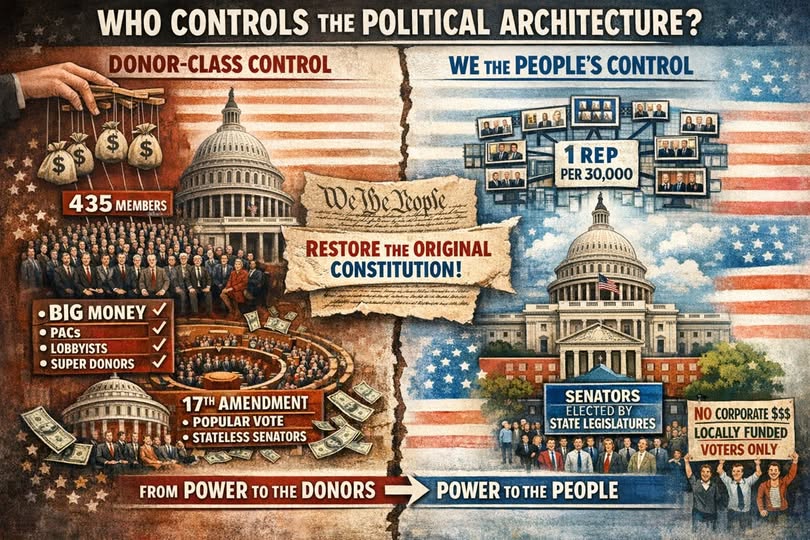
By sponsoring constitutional amendments that return governing power to the people and sharply curtail the influence of donor classes. Those donor classes consume excesses that dwarf even our national debt. Through tailor-made statutory schemes, they enrich themselves by overtaxing the public while controlling campaigns through complex, self-serving funding laws.
Step One: Arkansas as the Model
The first step in Arkansas is structural reform of representation itself: reduce the representative-to-population ratio from 100 state representatives total to one representative per 5,000 people, or a portion thereof, within each county. We should resist exceeding 10,000 citizens per representative. The precise ratio should be decided by registered voters, not locked in by donor-class convenience.
Representatives would be officed within the county or county district they serve, and would vote from that office. All meetings would be virtual, recorded, and publicly reviewable by their constituents. Their job is not to represent donors; it is to represent the people who elected them.
Every proposed piece of legislation would be submitted to the Good Government Constituent Committee overseeing that representative, ensuring that the consensus of the governed prevails over the preferences of competing donor interests. Representatives would be full-time, working virtually from their county offices.
The marble palace made sense in the horse-and-buggy era. It does not today. Modern technology allows better representation at a lower cost. Representatives can be paid better precisely because there will be no lavish travel, no luxury hotels, no lobbyist-funded entertainment. No more lobster dinners and fine wine bought with influence money. Lobbyists will no longer entertain lawmakers, because they won’t have access to them outside of their offices or off the record, as we will require all communications from lobbyists be.
The donor classes and their political parties will fight this relentlessly. We expect that. Power is rarely surrendered voluntarily.
Our response is structural: we will run slate-based candidates who are prohibited from spending money on their own campaigns. They will campaign on merit. We will provide the platform, manage the expenses, and ensure equal exposure. This allows communities to choose leaders they trust, not candidates pre-approved by donor networks. We will distinguish our candidates from donor-funded candidates. Any current officeholders who will agree to stop taking money to run for office can offer themselves to the people, but they must donate their unspent funds to pay off state obligations as a condition of acceptance on the local slate. Some of them are really good people and would love to avoid the frustration of fundraising to focus on political ethics and principles rather than donor appeasement. We should welcome those people.
The donor classes can pour money into commercial messaging if they wish. We will out-message them with better ideas, better debates, and superior grassroots networks. We will gain the support of more than enough people because most want good government, and they all know it is infested with corruption, waste, and abuse. There are plenty of us who do not want to take it anymore.
That is how self-government is restored—not by begging permission, but by rebuilding the machinery the Constitution already gave us. That, my friend, is part of step one. I have left out many of the nuances because those will become available soon on the website, but this should be enough of a birds-eye view for you to get a small glimpse of how we can regain control of our nation, one county at a time. No longer will sovereign citizens have to buy phony legalese from snake-oil salesmen. They can help take back our government in a constitutional way and use constitutional methodologies to refine statutory law in accordance with the consent of the governed. Let us do this by the book!
Presented by Dr. Ron Bartels








Leave a Reply